
In Australia, as National Safe Work Month 2026 approaches, many workplaces use October to refresh internal safety culture with toolbox talks, hazard walk-throughs, and refresher training. It is also a good time for a cleaning contractor safety review. If you need a contractor WHS checklist Australia sites can use, this safe work month facility manager checklist is a practical start.
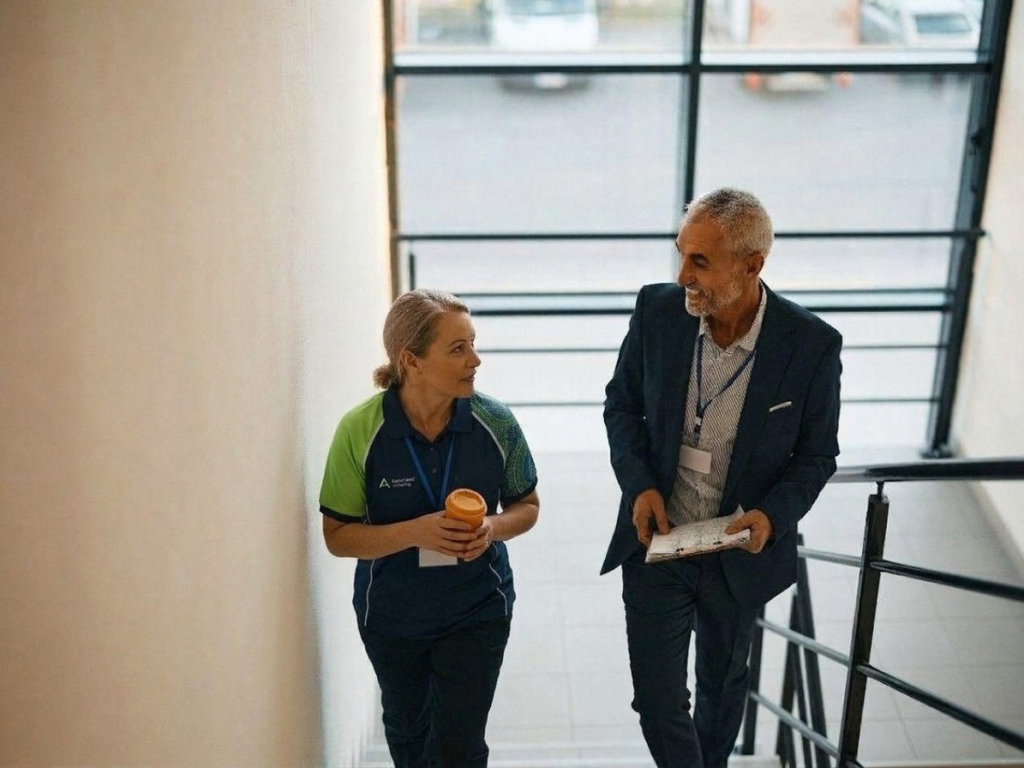
Cleaning contractors often work with less direct oversight than almost anyone else on site. They may start before dawn, work after hours, and move between sites in one shift. If Safe Work Month is already prompting a broader safety conversation in your organisation, your cleaning contractor’s WHS practices should be part of it too. As part of your workplace safety campaign, include contractors as well. Like your employee safety programs, this review should be simple and repeatable.
Why Review Each Year, Not Just at Renewal
It’s easy to check a contractor’s WHS credentials once and then leave them alone for years. But systems drift. Staff change, equipment changes, chemical suppliers change, and rigour can fade. Safe Work Month gives you a simple annual trigger for a WHS compliance review before small gaps turn into larger risks.
WHS duties are also shared, and WHS duties cannot be contracted out or transferred when the contract is signed. Safe Work Australia explains that where multiple duty holders are involved, each retains responsibility to the extent they can influence and control the matter.
Documentation and systems
- Do they have current Safe Work Method Statements (SWMS) for any high-risk tasks on your site?
- Is their chemical register and Safety Data Sheet (SDS) list current and easy to access?
- Can they show staff induction and ongoing training, not just one onboarding record?
Incident and hazard management
- Do they have a clear, written process for reporting incidents and near-misses?
- Have they shared incident records with you in the past 12 months, or would you only hear about a serious event after it happened?
- Do they know what constitutes a notifiable incident and when it must be reported to the WHS regulator?
Site-specific practices
- Has induction and training been updated for changes to your site — new layout, new equipment, new access rules?
- If your site has higher-risk areas such as loading docks, plant rooms, after-hours lone work, or height access, do their safe work practices match those risks?
- Do cleaners know what to do if they find broken glass, sharps, a biological hazard, or an aggressive member of the public?
- Are waste handling rules right for what your site actually produces, including heavier or higher-risk waste than normal office rubbish?
Communication and accountability
- Is there one clear contact for safety concerns, and do they respond quickly when something is flagged?
- Do they raise hazards they notice on your site, or only respond when asked?
Your own responsibilities
Since WHS is shared, review your own side too. Our commercial cleaning WHS compliance guide for facility managers covers the responsibilities facility managers and building owners should consider:
- Have you given an up-to-date site induction that covers changes since the contract started?
- Are contractors told about current site hazards, restricted areas, and emergency procedures?
- Is there a clear internal process for contractors to report hazards, and does someone act on the reports?
Don’t Overlook Psychosocial Safety
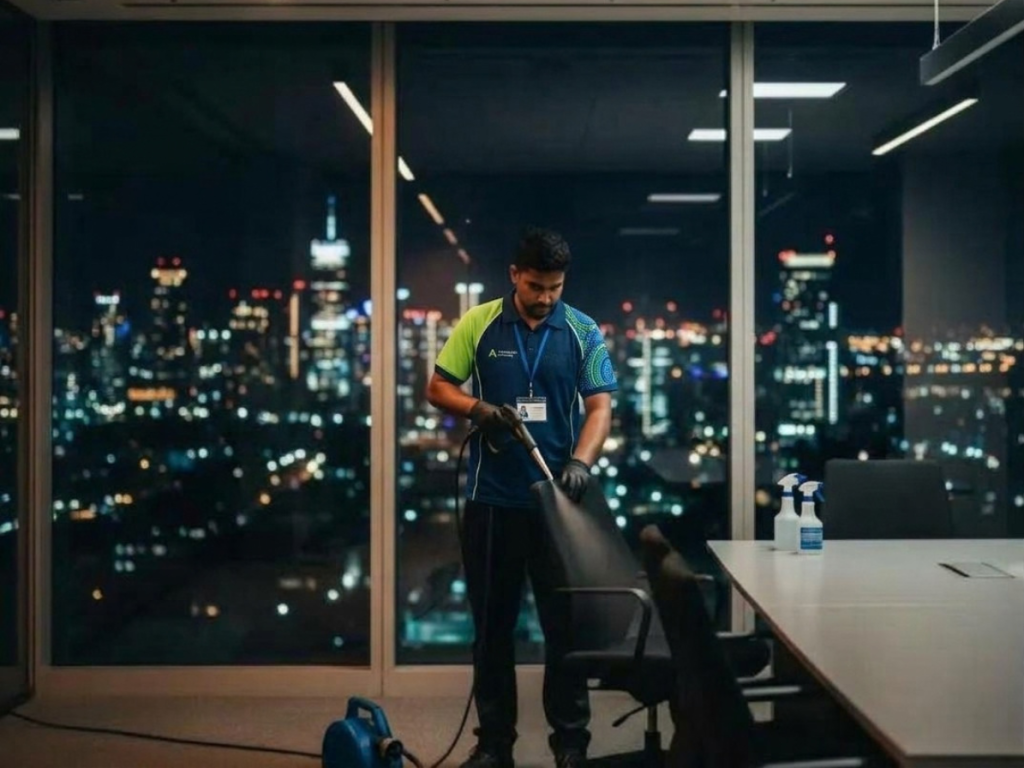
Modern WHS practice covers more than physical hazards. That matters for contractors too. Cleaners who work alone, after hours, or under tight time pressure can face fatigue, isolation, unclear instructions, or aggressive behaviour from the public. Good employee safety programs should cover these risks as well.
As part of a Safe Work Month review, ask:
- Do after-hours or lone-working cleaners have a reliable way to contact someone fast if something goes wrong?
- Does the contractor’s incident reporting process cover threatening or aggressive behaviour, not just physical injuries?
- Are workloads and schedules realistic, or do they create avoidable fatigue?
These checks do not replace the contractor’s own duty to protect staff wellbeing. They do help you spot site conditions, access issues, poor lighting, and unrealistic schedules that may be adding to the risk.
What to Do If the Review Raises Concerns
If this checklist surfaces gaps — outdated documentation, vague answers, no real incident reporting process — treat them seriously. Do not wait until the next contract renewal. A review only matters if it leads to action. Rank the issues by risk, assign each fix to the right person, and set a realistic timeline.
For anything genuinely serious, it can be reasonable to pause the specific task or work method until a proper control is in place. Do not wait for the fix to happen on its own schedule.
Depending on the size of the problem, this may mean asking for updated documents and a clear plan, or, if the gaps are major, treating them as a factor in whether to keep the relationship. Our guide on WHS compliance for commercial cleaning contracts covers good systems in more detail, and our guide to writing an RFP for commercial cleaning services is useful if the review leads you to go back to market.
For sites with more complexity — warehouses, industrial facilities, or multi-tenant buildings — our warehouse and industrial cleaning WHS guide explains the extra issues that sit outside a standard office.
The Bottom Line
Safe Work Month is a useful annual prompt to look past your own org’s internal safety practices and ask a harder question: do you really know how seriously your contractors take WHS, or are you still relying on assumptions from when the contract was first signed? A short, genuine review — not a box-ticking exercise — is one of the simplest ways to reduce risk in a relationship that often runs with less day-to-day visibility than almost any other service in your building.
Associated Cleaning is an Australian commercial cleaning company, established in 1969, providing ISO 9001-certified cleaning services across Brisbane, the Sunshine Coast, Sydney, Melbourne, and Moreton Bay. Our WHS practices include documented site inductions, current Safe Work Method Statements, and a clear incident reporting process for every site we service. To arrange a free site inspection and a no-obligation quote, call 1300 943 ACS or fill up our contact form.
Q&A
Question: Why should contractor WHS credentials be reviewed during Safe Work Month rather than only at contract renewal?
Safe Work Month is a simple annual reminder to check whether a contractor’s WHS systems are still current and effective. Waiting until contract renewal can let gaps build up over time, especially if there has been staff turnover, new equipment, changed site conditions, or different chemical suppliers.
Question: What documents should a facility manager ask a cleaning contractor to provide during a WHS review?
Key documents include current Safe Work Method Statements for any high-risk tasks, an up-to-date chemical register, easy-to-access Safety Data Sheets, evidence of staff induction and ongoing training, and written steps for reporting incidents, near-misses, and hazards.
Question: Does hiring a contractor transfer all WHS responsibility away from the facility manager or organisation?
No. WHS duties are generally shared between the organisation and the contractor. Facility managers should still provide current site inductions, share known hazards and emergency steps, and keep a clear process for contractors to report safety concerns.
Question: Why is psychosocial safety relevant to cleaning contractors?
Cleaners may work alone, after hours, under time pressure, or in public-facing areas where they could face fatigue, isolation, unclear instructions, or aggressive behaviour. Reviewing these risks helps identify site conditions, scheduling issues, or communication gaps that could affect contractor wellbeing.
Question: What should happen if a WHS review identifies serious gaps?
Any gaps should be ranked by risk, assigned to the right responsible party, and given a realistic timeline for action. For serious issues, it may be appropriate to pause the specific task or work method until suitable controls are in place.