
Cleaning contractors often work with less direct supervision than most other services in your building — early mornings, after hours, and across multiple sites in one shift. That makes WHS compliance one of the most important, and most overlooked, parts of hiring a commercial cleaning contractor.
For facility managers and building owners, real WHS compliance in commercial cleaning is not just a box to tick during selection. It directly affects your risk exposure, because owners and managers can share safety duties even when the work is outsourced.
For workplace health and safety cleaning contractors, clear systems matter as much as the cleaning itself.
Why WHS Compliance Matters When Outsourcing Cleaning
It’s a shared duty, not just the contractor’s
Under Australian WHS law, a business that hires a contractor is often a PCBU in its own right, and so is the cleaning contractor. That means more than one party can have safety duties on the same site at the same time.
Hiring a contractor does not move all responsibility away from you. It creates a shared duty, so WHS obligations in cleaning contracts should be clear, written down, and agreed early.
(WHS laws differ a little by state. Victoria uses its own OHS framework, not the model WHS laws used elsewhere. If you work across states, check the rules that apply in each one.)
The risks of getting it wrong
Non-compliance is not just a paperwork issue. It can lead to injuries, insurance disputes, fines, and disruption if an incident starts an investigation.
A contractor without proper WHS systems is a real site risk, not just a compliance issue.
Key WHS Obligations for Commercial Cleaning Contractors
Safe Work Method Statements (SWMS)
A SWMS explains how a high-risk task will be done safely. That might include window cleaning at height or using strong chemicals in a closed area.
A contractor should be able to provide current SWMS for work done on your site. They should be tailored to the actual tasks, not pulled from a generic template. These safe work practices for cleaning services in Australia should be easy to check and specific to the task.
Safety Data Sheets (SDS) and chemical registers
Any chemical used on your site should have a Safety Data Sheet that explains safe handling, storage, and emergency response information.
Contractors should keep an up-to-date chemical register with an SDS for every product used in your building. That register should be easy for staff and for you to access.
Staff training and induction
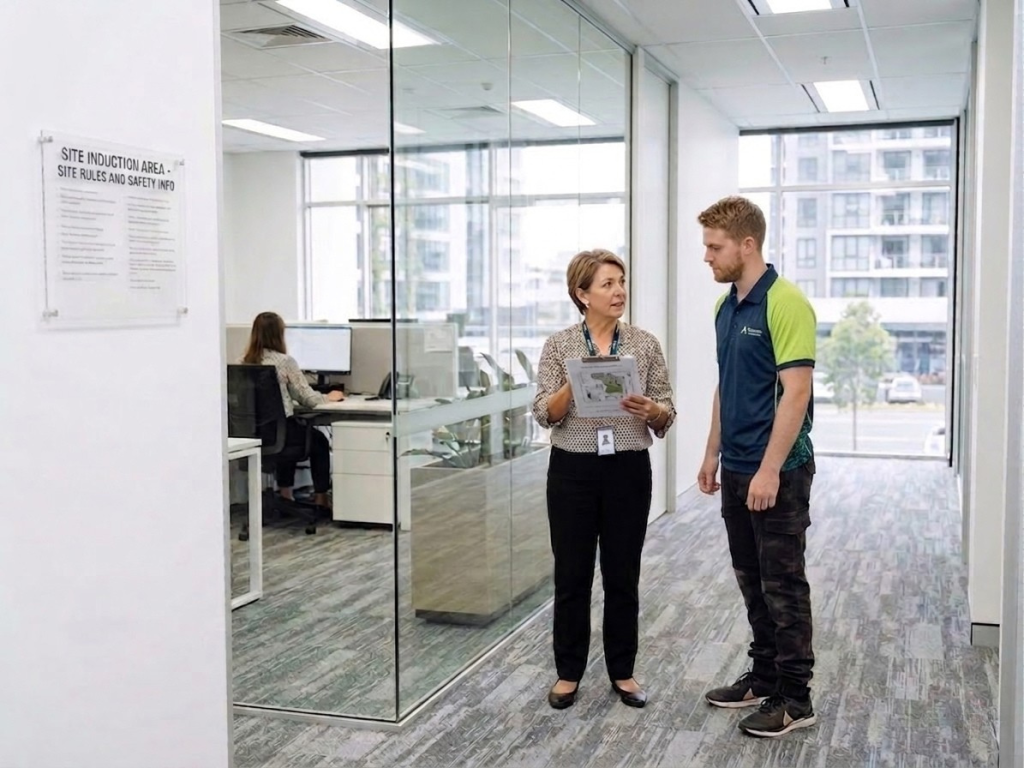
Cleaning staff should be inducted not only on the job, but also on your building’s safety rules. That includes emergency procedures, restricted areas, and any site-specific hazards.
Ongoing training matters too. It shows the contractor is treating WHS for cleaners as an ongoing duty, not a one-off task.
Incident reporting and record-keeping
A good contractor will have a clear process for reporting and recording incidents and near-misses. They should also be willing to share relevant records with you.
Serious incidents, such as major chemical exposure, electric shock, or a serious fall, usually need to be reported to the state or territory WHS regulator. If a contractor is vague about incident handling, treat that as a warning sign.
Common Commercial Cleaning Safety Hazards and How They’re Managed
Slips, trips, and falls
Wet mopping, loose cords, cluttered storage areas, and poor lighting are common causes of slips and falls.
Good controls include wet-floor signs, cleaning in sections so one dry route stays open, cord management, and quick reporting of damaged floors or bad lighting.
Hazardous chemicals
Good chemical safety means more than having an SDS on file. It also means labelled containers, staff trained to read labels and SDSs, correct dilution systems, and clear spill steps.
Reactive chemicals should never be stored or mixed together.
Manual handling
Cleaning often involves repetitive physical work, such as lifting bins, carrying buckets, and pushing trolleys.
Controls include using the right equipment, avoiding overfilled bags or buckets, and teaching staff safe task methods rather than just task steps.
Working alone or after hours
Many commercial cleaners work when a building is mostly empty, such as early mornings, evenings, or overnight. This is isolated work, so it needs extra care.
Use check-in and check-out steps, a reliable way to contact help, well-lit access routes, and clear escalation if a worker misses a check-in.
Plant, equipment, and electrical safety
Cleaners often use powered equipment such as vacuums, polishers, and scrubbers. They may also work around a client’s own machinery.
Basic controls include checking cords and equipment before use, tagging out damaged gear, and following lock-out or isolation steps before cleaning near machinery.
The hierarchy of controls
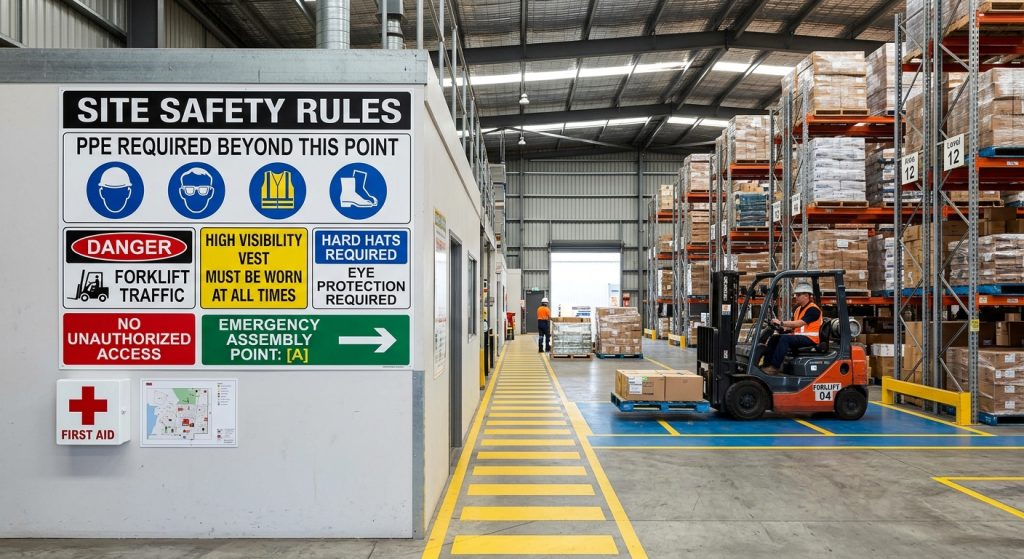
A common mistake is to treat PPE as the main control. In WHS practice, PPE is the last line of defence, not the first.
A stronger approach follows the hierarchy of controls. Start by removing the hazard where possible. Then substitute a safer product or method, isolate the task from others, use engineering or administrative controls, and only then use PPE such as gloves, eye protection, or non-slip footwear.
A contractor who can explain that hierarchy is usually showing a more mature approach. That is better than just pointing to a box of gloves.
What Facility Managers and Building Owners Are Responsible For
WHS compliance is not one-way. As the client, you should give contractors the information they need to work safely on your site.
That usually includes:
- A site induction before work starts
- Details of site-specific hazards, such as restricted areas, plant rooms, loading docks, and known issues
- Emergency procedures and exit points
- Access arrangements, such as keys, alarms, lifts, and car parks
- Notice of other work happening on site that could affect cleaning staff, such as construction, maintenance, or pest control
- A clear contact person for safety issues, and a way for cleaners to report hazards they find
Consultation matters too. Before changing cleaning times, products, staffing, or access, check in with your contractor. A change that looks minor to you can create new risk for cleaners.
Questions to Ask a Cleaning Contractor About WHS
When reviewing a contractor or preparing a tender, ask directly:
- Can you provide current SWMS for high-risk tasks on our site?
- Do you keep an up-to-date SDS and chemical register, and can we access it?
- What does your staff induction and ongoing training process look like?
- How do you report and manage incidents or near-misses, and will we be told?
- How do you manage lone or after-hours workers on our site?
- What insurance do you hold, including public liability and workers’ compensation?
A contractor with genuine WHS systems should answer clearly and without hesitation. Vague or defensive answers are a sign to look deeper before signing a contract.
What Happens If a Cleaning Contractor Isn’t WHS Compliant?
Beyond the risk of an incident, non-compliance can expose your organisation to shared liability, complicate insurance claims, and, for government, healthcare, or education clients, harm your own compliance standing with regulators or funding bodies.
It can also disrupt your operations if a contractor is investigated or suspended.
That is why commercial cleaning safety compliance should be a core selection rule, not something checked after the contract is signed.
The Bottom Line
WHS compliance is one of the clearest indicators of how seriously a cleaning contractor takes their responsibilities — to their own staff, and to the safety of everyone in your building. It’s also a shared responsibility: a contractor with documented, current WHS systems reduces your organisation’s risk exposure, but you play a role too by giving contractors the site information and consultation they need to work safely.
Before signing any commercial cleaning contract, it’s worth asking a contractor to walk you through their WHS systems directly, rather than relying on assurances alone.
At Associated Cleaning, we understand WHS compliance can feel like a lot to navigate — which is exactly why we make it a core part of how we operate, not an afterthought. From site-specific inductions to documented safe work practices, our team is built to give you confidence that your building, your staff, and our cleaners are genuinely looked after. Contact us for a free commercial cleaning quote.
Q&A
Question: What does “shared responsibility” for WHS mean when outsourcing cleaning?
Under Australian WHS law, both your organisation and the cleaning contractor are PCBUs with overlapping duties on the same site. Hiring a contractor does not transfer responsibility; it creates shared duties. WHS obligations in cleaning contracts should be discussed and written down. Victoria uses its own OHS framework rather than the model WHS laws used elsewhere, so check the rules that apply in each state if you work across more than one.
Question: What WHS information and support are facility managers responsible for providing to contractors?
Give a site induction; details of site-specific hazards such as restricted areas, plant rooms, loading docks, and known issues; emergency procedures and exit points; access arrangements such as keys, alarms, lifts, and parking; notice of other work that could affect cleaners, such as construction, maintenance, or pest control; and a clear safety contact and hazard reporting path. Consult before changing cleaning times, products, staffing, or access, because small changes can create new risk.
Question: Which WHS documents and processes should you request or review when selecting a cleaning contractor?
Ask for tailored SWMS for the high-risk tasks on your site; an up-to-date chemical register with SDS for every product and client access; evidence of staff induction and ongoing training, including site-specific requirements. Also ask for a clear incident and near-miss reporting process, with a willingness to share relevant records and notify the regulator for reportable incidents; procedures for lone or after-hours work, including check-ins, escalation, and reliable communications; and proof of insurance, including public liability and workers’ compensation.
Question: What are the main cleaning hazards and what do good controls look like in practice?
- Slips, trips, and falls: wet-floor signs, cleaning in sections so a dry route stays open, cord management, and quick reporting or repair of flooring and lighting issues.
- Hazardous chemicals: labelled containers, staff trained to read labels and SDSs, correct dilution systems, clear spill steps, and never mixing reactive chemicals.
- Manual handling: the right equipment, such as trolleys and bin lifters, avoiding overfilled bags or buckets, and task-specific safe methods.
- Working alone or after hours: check-in/check-out, reliable ways to contact help, well-lit access routes, and clear escalation if a check-in is missed.
- Plant, equipment, and electrical: pre-use checks of cords and equipment, tag out damaged gear, and follow site lock-out or isolation near machinery. Use the hierarchy of controls first; treat PPE as the last line of defence, not the main control.
Question: What happens if a contractor isn’t WHS compliant, and why does it matter at procurement?
Non-compliance can lead to injuries, insurance disputes, fines, and service disruption if an investigation or suspension occurs. Because WHS duties are shared, your organisation may face liability too. In government, healthcare, or education, your own compliance standing can also be affected. Make WHS compliance a core selection rule and have the contractor walk you through their systems before you sign.