
For most commercial buildings, the Christmas and New Year shutdown is the one stretch of the year when the building is genuinely empty. No staff at desks, no tenants in the corridors, no visitors in reception. That makes it the best window you’ll get for the cleaning work that’s difficult or impossible to do while people are around.
It also fills up fast. Cleaning contractors, maintenance trades, and other service providers are all working to the same short window, so the facilities that get the best results are usually the ones that planned in November, not the week before closing.
This guide covers why the shutdown suits deep cleaning, what to include, how to prepare your building, how to sequence the work, and how to check it was done so you walk back into a fresh site in January.

Why the Shutdown Is the Best Time for Deep Cleaning
Routine cleaning must work around your people. Periodic work often can’t, and an empty building solves several problems at once:- Wet work has time to dry. Carpet extraction and floor scrubbing leave surfaces damp or slippery, and an empty building means they can dry fully before anyone walks on them.
- Furniture can be moved. Cleaners can reach under desks, behind workstations, and along walls that are normally blocked.
- Noisy or disruptive equipment isn’t a problem. Floor machines, pressure washers, and high-powered extraction machines are far easier to run when nobody is trying to work.
- Restricted areas become accessible. Meeting rooms, executive offices, and server-adjacent spaces that are awkward to clean during the working week can be done properly.
- It resets the building for the new year. Staff return to a space that’s noticeably fresher, which sets the tone for the first weeks of January.
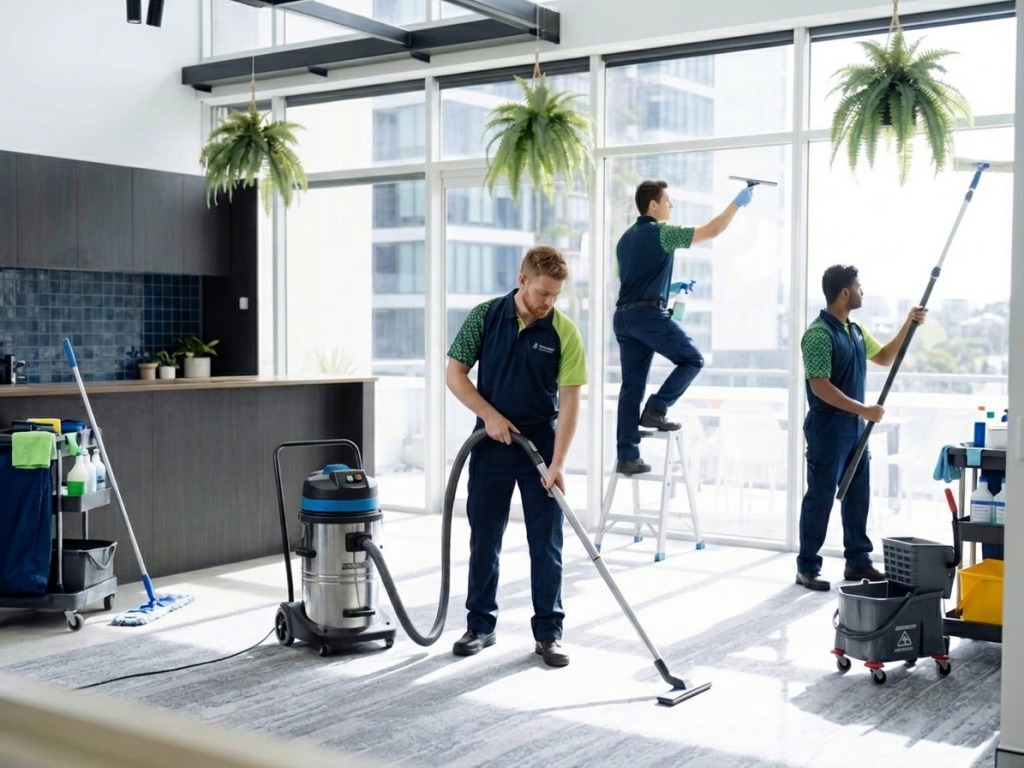
What Should You Clean During a Christmas Shutdown?
Prioritise the areas that collect grime, germs, odours, and dust while the building is busy, and the jobs that are hardest to do around people. It helps to think of the work in three layers:- Hygiene: kitchens, bathrooms, bins, and high-touch surfaces
- Presentation: floors, carpets, glass, and the reception and entry areas people see first
- Prevention: the small jobs that stop problems forming while the building sits empty, such as clearing perishables and food waste
Carpets and soft furnishings
Deep extraction or steam cleaning for carpeted areas, upholstery cleaning for reception and breakout furniture, and spot treatment for stains that have built up over the year.Hard floors
Machine scrubbing and, where floors need it, more intensive maintenance such as stripping and resealing. These tasks are best done when the floor can be left undisturbed while it dries or cures.Windows and glass
Internal and external window cleaning, including frames and tracks, plus glass partitions and entry doors.Kitchens and breakrooms
A full deep clean of appliances inside and out, cupboards, benches, and sinks. This is also the right time to clear and clean fridges, which are often the least pleasant part of returning after a break.Bathrooms and amenities
Detailed cleaning beyond the routine service, including grout, fixtures, vents, and partitions.High-level and often-missed areas
Dusting of vents, light fittings, tops of cabinets, and ledges that don’t get regular attention, along with blinds and window tracks.Exterior and entry areas
Pressure cleaning of paths, entrances, and car parks where relevant, so the first impression in January matches the clean inside.How Should You Prepare an Office for a Christmas Shutdown Clean?
Give staff clear instructions, remove obstacles, secure documents, and confirm access. The cleaner the handover, the more time your contractor can spend on skilled work instead of clearing avoidable clutter.- Clear the fridges and kitchens. Remove perishables and anything that shouldn’t sit for weeks. Forgotten food is one of the most common causes of unpleasant returns.
- Clear desks and floors. Ask staff to remove personal items, cables, cups, decorations, and clutter so cleaners can reach everything.
- Secure confidential material. A simple “clear desk before close” reminder keeps sensitive documents locked away, so cleaners aren’t expected to move or handle them.
- Flag what must not be touched. Tell your contractor which IT equipment, fragile items, or rooms should be left alone, and what can and can’t be moved, sprayed, or unplugged.
- Empty bins and recycling. Don’t leave full bins or food waste to sit through the break, and confirm external bin collection dates.
- Confirm access and security. Make sure your contractor has the right keys, codes, and alarm procedures for the dates they’ll be on site, and agree a named contact who can make decisions during the closure.
- Check your air-conditioning schedule. Carpets dry far faster with the system running, so confirm what will be on during the shutdown.
- Agree who does the final lock-up. Name one person responsible for the last walk-through and give them a written list covering lights, non-essential equipment, windows, and alarm settings. Systems that need to stay on, such as servers, refrigeration, alarms, and fire systems, should be confirmed with the relevant provider beforehand.
- Tell your staff and tenants. Let everyone know the dates, what’s being done, and any items that need to be moved or protected.
A Planning Timeline
Working back from your closing date keeps the process calm. A simple timeline looks like this:- Four to six weeks before closing: choose your preferred cleaning dates, confirm the scope, and request quotes if needed. Check whether any carpet or floor treatments need extra drying time.
- Three weeks before: tell staff, suppliers, and building contacts the shutdown dates, cleaning windows, and any access restrictions.
- Two weeks before: confirm waste collections, consumables, plant care, security contacts, and any planned maintenance visits.
- Final week: send desk-clearing reminders, ask staff to clear their items from the fridge, and prepare keys or access details.
- Final working day: complete the lock-up walk-through, check bins and kitchens, and confirm alarm settings.
Sequencing the Work
The order of work makes a real difference. A sensible sequence is:- Other trades first. If painting, maintenance, or flooring work is planned, schedule the clean after it, not before. Otherwise you’ll be cleaning the same areas twice.
- High-level dusting before floors. Dust falls, so work from the top of a room down.
- Wet work next. Carpet extraction and floor scrubbing, with enough time left to dry fully.
- A final detail clean last. Reset the building close to your return date, so it’s presentable the morning staff arrive.
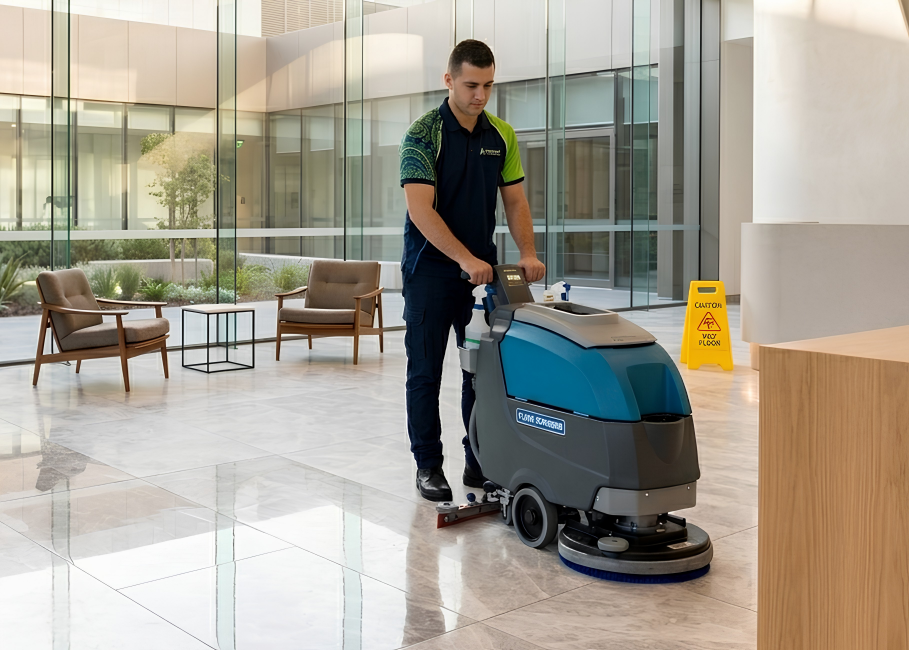
Working in an Empty Building
An empty building means contractors are often working alone or in small teams with no one on site to check in with. It’s worth confirming:- How check-in and check-out are handled, and how you’ll know work started and finished on the days agreed
- How cleaners can contact someone if there’s an incident or access problem during the break
- Which areas, if any, are off limits
Making Sure the Work Was Done
When nobody is in the building, nobody notices if a task is missed until staff return, and by then it’s much harder to put right. Before the shutdown, agree how completion will be verified:- A written scope listing what’s included, area by area
- Photo evidence of completed work, particularly for areas staff don’t normally see
- A walk-through before reopening, ideally a day or two before staff return so anything missed can still be fixed
The First Day Back
The best shutdown plans include a reopening check, not just a closing one. Before staff return, ideally a day or two beforehand, walk the building and confirm:- Floors and carpets are fully dry
- Bins are back in place and bathrooms and kitchens are stocked
- Meeting rooms and reception are ready
- Heating, cooling, internet, phones, printers, and access control are working as expected
Different Facilities, Different Priorities
- Offices usually focus on carpets, kitchens, windows, and a full reset of shared areas.
- Warehouses and industrial sites often use their shutdown for floor work and areas that are normally too busy to access safely. See our guide on WHS and safety considerations for warehouse cleaning contracts.
- Schools and education facilities have a longer holiday window, which allows more intensive work across classrooms and amenities.
- Medical and allied health clinics typically close for a shorter period, so cleaning needs to be scheduled tightly around reopening. See our guide on after-hours cleaning for clinics.
Questions to Ask Your Cleaning Provider
- Can you provide a written scope for the shutdown clean, area by area?
- When do you need confirmation of dates, and how quickly can you book?
- How will the work be sequenced, and what time is allowed for drying?
- How do you handle access and security during the shutdown?
- How will we know the work was completed, and can we see photo evidence?
- Is the shutdown clean quoted separately from our routine contract?