
Strata cleaning complaints often start with a resident note, then end up in the manager’s inbox or at a committee meeting.
Residents do not need the contract to see a dirty lift or a smelly bin room.
Most cleaning service complaints come from a few basic causes. They are usually about scope, frequency, access, supervision, or proof of work. This guide covers the common strata management issues and shows how to fix them.
Note on terms: some states call a strata scheme an owners corporation or a body corporate. Rules on quotes, decisions, and common property can differ by state, so check your state’s legislation and your scheme’s by-laws.
The Five Main Causes Behind Most Cleaning Complaints
When a complaint comes in, it usually fits one of these:
- Scope. The task is not in the written scope, or the line between common property and private lots is unclear. Often, the people making the complaints are not aware of what is included or excluded from the scope of works.
- Frequency. The task is listed, but it is not done often enough for the way the area is used.
- Timing and access. Cleaners cannot reach the area, or the work happens at the wrong time.
- People and supervision. Staff change too often, or no one checks the work.
- Verification. There is no record, so no one can tell if the clean happened.
Keep that list in mind. Most problems below come back to one of these five causes.
The Complaints Strata Managers Hear Most
The bin room smells
What’s usually behind it: frequency and scope. Bin rooms are used hard and fill with food waste. A weekly sweep will not remove the smell. Sanitising and odour control are often left out of the scope. Bin chutes are often missed too.
A quick mop only cleans the floor. It does not clean the bins, lids, walls, or drains where residue and smell build up. The problem is also uneven. Bin rooms are often worst after weekends and collection days, so a flat schedule misses the peak.
What fixes it: add bin room sanitising to the schedule. Set the frequency by use, not by habit. Include chutes if you have them, and add a periodic deep clean, such as monthly or quarterly pressure washing. If collection timing or resident dumping is part of the issue, raise that with the waste contractor or committee.
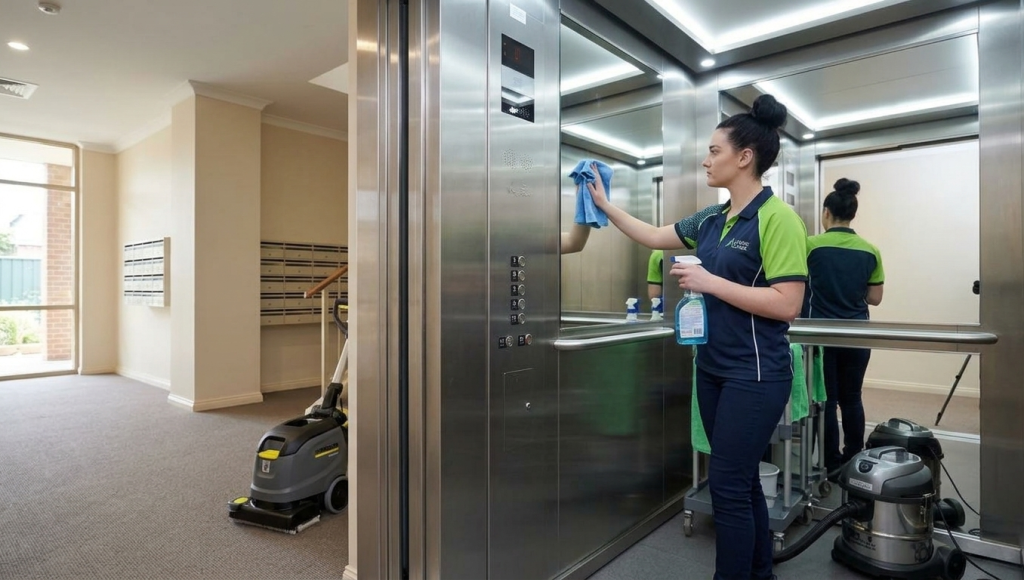
The lifts are dirty
What’s usually behind it: lifts are high-touch areas, so a clean in the morning may not last to evening. Marks on walls and buttons, and grit in the tracks, build up fast. Move-in and move-out days make it worse.
What fixes it: include lift floors, walls, buttons, and door tracks in the daily scope. In busy buildings, add a midday spot clean. Use move-day rules so lift protection pads are fitted and the lift is cleaned afterwards.
The car park is a mess
What’s usually behind it: car parks are often left out of the scope, or only swept. Oil marks, cobwebs, and leaf litter build up slowly, so the complaint can seem sudden.
What fixes it: include regular sweeping and scheduled pressure cleaning with dates. Give residents notice before pressure cleaning so bays can be cleared, as parked cars often block the areas that need it most. Budget it in advance, so the committee is not asked for surprise spending later.
The entrance and glass look dirty
What’s usually behind it: glass is often a periodic task, not a daily one. If it is missing from the contract, or the frequency is too low, the main entrance shows it first.
What fixes it: put entrance glass and door handles on a set schedule. Keep full window cleaning as a separate periodic item at a frequency that makes sense for your building.
“I never see the cleaners. Are they even coming?”
What’s usually behind it: verification. Cleaning in a strata building often happens early or late, so no one sees it. When the work is done well, it can look like nothing happened. When it is missed, everyone notices.
What fixes it: visibility and accountability. Ask your contractor for time-stamped attendance and task records you can share with the committee. Our cleaners record their attendance and completed tasks through ACS Connect, while client requests are received instantly so they can be actioned promptly. Through our Customer Portal, strata managers can access cleaning records and share proof of service with committees and owners.
“We keep complaining about the same thing”
What’s usually behind it: no one is looking for patterns. Each complaint gets a one-off fix, the cleaner is reminded, and the issue returns a few weeks later. Repeat complaints usually point to scope or frequency, not effort. If the scope is right, check whether a supervisor inspects the site regularly and whether staff keep changing.
What fixes it: track recurring issues and follow them through to completion. Our Customer Portal helps strata managers monitor reported issues, including their status and completion dates, making it easier to identify recurring problems, review cleaning requirements and ensure issues are followed up rather than repeatedly resurfacing.
The shared facilities aren’t clean
What’s usually behind it: confusion about who is responsible. Pools, gyms, BBQ areas, and function rooms can sit between the cleaning contract and separate facility arrangements. For a deeper look, see who is responsible for cleaning shared facilities in a strata building.
What fixes it: state in writing which facilities are in the cleaning contract, how often they are serviced, and who handles anything outside it.
A Quick Reference
| Complaint | Most likely cause | First thing to check |
|---|---|---|
| Bin room smells | Frequency and scope | Is sanitising scheduled, and how often? |
| Dirty lifts | Frequency | Is a midday spot clean needed? |
| Car park mess | Scope | Is it included, and is pressure cleaning scheduled? |
| Dirty entrance glass | Scope and frequency | Is glass cleaning in the contract, and how often? |
| Never see the cleaners | Verification | Do you have attendance and task records? |
| Same complaint repeatedly | Scope or frequency | What does the complaint log show? |
| Shared facilities untidy | Responsibility | Who is actually responsible for them? |
Contractor Problem or Contract Problem?
Before you raise a complaint, ask four questions:
- Is the task in the written scope? If not, it is a scope problem, and reminders will not fix it.
- Is the frequency right for the way the area is used? If not, the contractor may be doing exactly what the contract says.
- Did the clean happen? If there is no record, check before you assume either way.
- If it is in scope, at the right frequency, and it did happen, was it done to standard? Only then is it a performance issue.
This simple check saves a lot of friction. It also stops a committee from replacing a contractor who was doing the job as written, only to have the same complaints return with the next one.
Handling Complaints So They Don’t Return
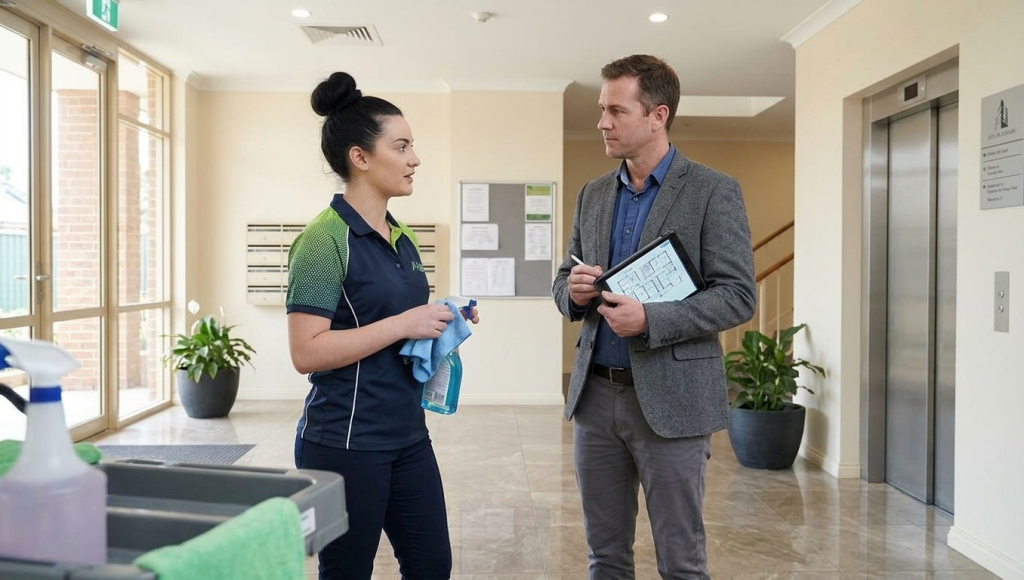
- Log every complaint with the date, location, and what was reported.
- Send it to a named contact at the contractor, not a general inbox.
- Agree on a response time and confirm the fix in writing.
- Look for patterns each month, so repeat problems are reviewed as scope or frequency issues.
If You Need to Choose or Change a Contractor
Everything above also tells you what to look for in a new provider:
- A written scope, area by area, including bin rooms, lifts, car parks, glass, and shared facilities
- Itemised pricing, so a volunteer committee can see what each part costs. Our commercial cleaning services cost guide explains how quotes are built.
- Periodic work with dates, priced in the contract, not left as extras
- Current insurance and safety documents, which the strata manager should keep on file. Our WHS compliance guide for commercial cleaning contracts covers what to ask.
- Evidence of work completed, not just promises
- A named contact who owns the relationship
Quote rules are mostly set by state law. In NSW, for example, an owners corporation must get at least two independent quotes for spending over $30,000, which many annual cleaning contracts exceed. Some schemes add their own rules, so check your legislation and by-laws. Read cleaning service reviews and ask for references, but compare them against the same written scope. Our guide on how to compare commercial cleaning companies in Australia gives you a simple scorecard. For more on why common areas matter to residents and property value, see our article on the importance of strata common area cleaning.
Frequently Asked Questions
How often should we clean common areas?
It depends on the building and the area. High-traffic lobbies, lifts, and bin rooms often need daily service, or several times a week in smaller buildings. Corridors, stairwells, and car parks can often run on a weekly plan. The scope should set frequency by area, not use one schedule for everything.
How quickly should we resolve a cleaning complaint?
Agree a response time with your contractor in advance, and confirm each fix in writing. Urgent hygiene issues, such as a spill or a bin room problem, should move faster than general requests.
How many quotes should a strata committee get?
Many schemes have their own rules, so check your state’s strata legislation and your by-laws. Even when it is not required, comparing at least three quotes on the same scope is good practice.
Should the manager or the committee choose the contractor?
It varies by scheme and state. In practice, managers usually prepare the scope and shortlist, and the committee or owners make the final choice.
The Bottom Line
Most strata cleaning complaints come down to five causes: scope, frequency, timing and access, people and supervision, and verification. If you work out which one you are dealing with before you act, you will fix the right thing. That may mean a contract change, a frequency change, or a direct talk with the contractor. And if you need a new contractor, you will know exactly what to ask for.
Associated Cleaning is an Australian-owned company established in 1969, providing ISO-certified (9001, 14001 and 45001) commercial and strata cleaning services across multiple Australian cities. Every site has a site-specific scope, with attendance and task completion recorded through ACS Connect. To arrange a free site inspection and a no-obligation quote, call 1300 943 ACS or fill out our contact form.