Walking into a doctor’s office, you naturally look for reassuring signs of safety, like a tidy waiting room. Yet spaces that simply look and smell fresh can create the “Illusion of Clean.” Surfaces can appear spotless while still carrying bacteria and viruses that no one can see.
Wiping a kitchen bench works at home, but healthcare needs a true medical clean. This goes beyond removing visible dirt to actively killing the germs that cause infection. Germs travel easily from a contaminated door handle to a patient’s hands, which is why professional medical centre cleaning services are essential for breaking the chain of infection.
This guide explains the standards Australian clinics are cleaned to, the methods that actually work, and how to check whether your current cleaning program measures up.
 The right cleaning partner turns invisible risks into a reliable standard of care, protecting both your patients and your healthcare staff.
At Associated Cleaning, our medical centre cleaning services combine trained technicians, documented procedures and strict infection control standards designed for Australian healthcare environments.
If you’re reviewing your current cleaning program or preparing for accreditation, request a tailored medical cleaning assessment and free quote to see how our team can support your facility.
The right cleaning partner turns invisible risks into a reliable standard of care, protecting both your patients and your healthcare staff.
At Associated Cleaning, our medical centre cleaning services combine trained technicians, documented procedures and strict infection control standards designed for Australian healthcare environments.
If you’re reviewing your current cleaning program or preparing for accreditation, request a tailored medical cleaning assessment and free quote to see how our team can support your facility.
Understanding Australian Healthcare Cleaning Standards: The Rulebook for Patient Safety
Visual cleanliness is easy to spot, but real safety depends on rules you can’t see. In Australia, the National Health and Medical Research Council (NHMRC) publishes the Australian Guidelines for the Prevention and Control of Infection in Healthcare, which set the baseline for how healthcare environments should be cleaned. Accreditation frameworks build on these guidelines, including the National Safety and Quality Health Service (NSQHS) Standards for hospitals and day procedure services, and the RACGP Standards for general practices. Everyday supermarket sprays aren’t designed for clinical settings. Healthcare cleaning relies on hospital-grade disinfectants entered on the Australian Register of Therapeutic Goods, regulated by the Therapeutic Goods Administration (TGA). These products have been assessed for their claims against the pathogens found in healthcare settings, provided they are used exactly as the label directs. Meeting this standard also requires proof. A good cleaning provider keeps a continuous paper trail for audits and accreditation, built on four key documents:- Safety Data Sheets (chemical handling guides)
- Training logs (cleaner training and competency records)
- Site-specific scopes (room-by-room checklists)
- Audit reports (regular quality inspections)
Beyond the Spray Bottle: Why Hospital-Grade Disinfectants and ‘Dwell Time’ Matter
At home, a quick spray and wipe feels productive. In a healthcare setting, that habit creates a dangerous illusion of cleanliness. Wiping a surface too quickly removes visible dust but can simply spread microorganisms around rather than killing them. To work properly, disinfectants need time. This window is called “dwell time” or contact time: the period a surface must stay visibly wet for the product to kill the organisms listed on its label. Think of it as a microscopic battle where the disinfectant needs enough time on the field to win. That’s why trained healthcare cleaners follow the contact time on each product’s label rather than wiping straight away. When a waiting room clipboard or armrest is disinfected, they make sure it stays wet for the full time. Cut that time short, and common viruses can survive the wipe-down. Getting the timing right is only one part of the picture. Germs constantly hitch rides from entry doors to a doctor’s keyboard, so preventing cross-contamination matters just as much.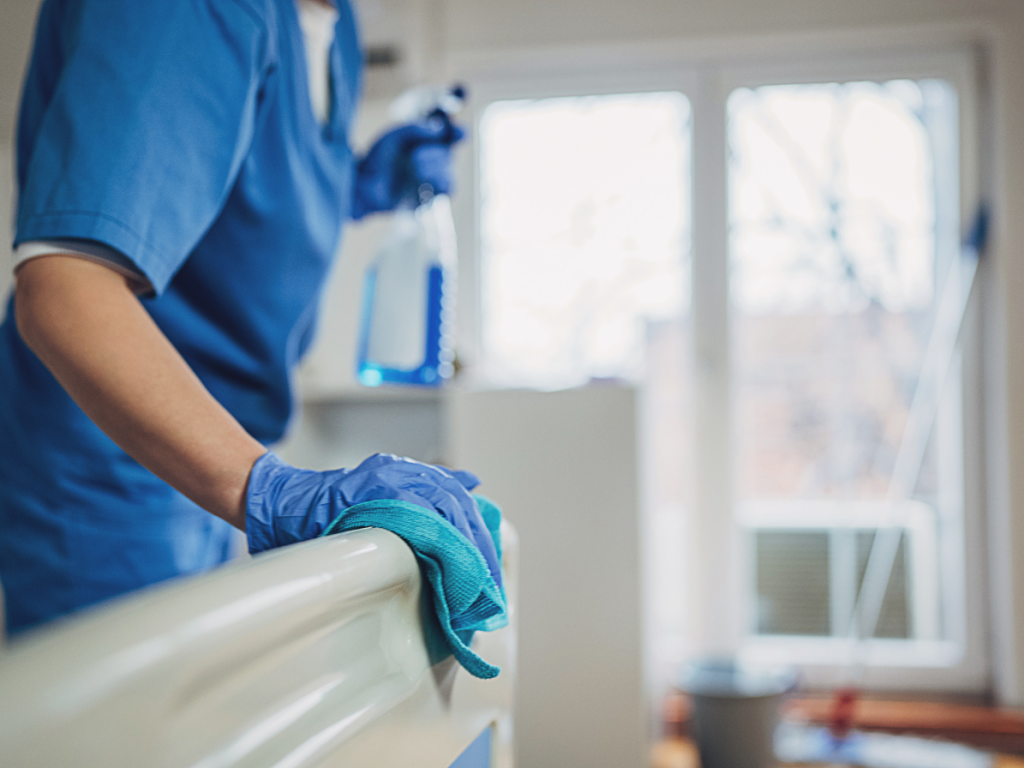
Mapping the Invisible Path: How Specialised Cleaning Prevents Cross-Contamination
Picture a common cold virus entering the clinic on a patient’s hand. It lands on the entry door, then moves to the reception counter, then to the next patient. Breaking that chain requires regular disinfection of the surfaces people touch most. These germs gather in predictable places. Trained cleaners focus on the top five high-touch hotspots:- Reception pens
- Light switches
- Armrests
- Tap handles
- Keyboards
Spills, Biohazards and Air Quality: Protocols That Go Beyond the Surface
Routine surface cleaning handles everyday germs, but clinics also deal with biological risks. When blood or body fluids are spilled, for example during a routine blood collection, general cleaning isn’t enough. Trained teams follow documented blood and body fluid spill procedures, using the right personal protective equipment and products to contain and disinfect the area safely. Air quality matters too. Fine dust and particles stirred up during cleaning can carry contaminants around a room, so healthcare cleaners use vacuums with HEPA filters, which trap fine particles instead of blowing them back into the air. Some areas also need a complete reset, known as a terminal clean. This is a thorough top-to-bottom clean of a treatment or procedure room, typically after a patient with a known infection or under contact precautions. Cleaning teams follow a detailed terminal cleaning checklist, covering everything from high surfaces and equipment down to the floor, and record the clean for the practice’s infection control records. Because the stakes are so high, practice managers need to know how to assess whether a cleaning provider is genuinely up to the job.How to Audit a Medical Cleaning Company: Red Flags and Must-Have Certifications
Whether you’re assessing a large provider or a local team, choosing the right cleaner for a clinic goes beyond checking basic cleaning skills. A general crew might leave a waiting room looking tidy, but healthcare cleaning needs specialised knowledge. One major red flag is a provider who can’t explain dwell time, the minutes a surface must stay wet for a disinfectant to work. When comparing providers, use this five-point checklist:- Healthcare-specific training records for all staff
- A list of the hospital-grade disinfectants they use, with Safety Data Sheets
- A committed audit schedule, with reports you can use for accreditation
- Clear personal protective equipment (PPE) procedures
- Documented procedures for spills, clinical waste and outbreaks
Securing Your Clinic’s Future Through Professional Cleaning
Effective disinfection directly affects patient trust and clinical safety. When reviewing your current cleaning provider, check how they manage dwell times, how they prevent cross-contamination, and whether their procedures align with the NHMRC guidelines and your accreditation standards.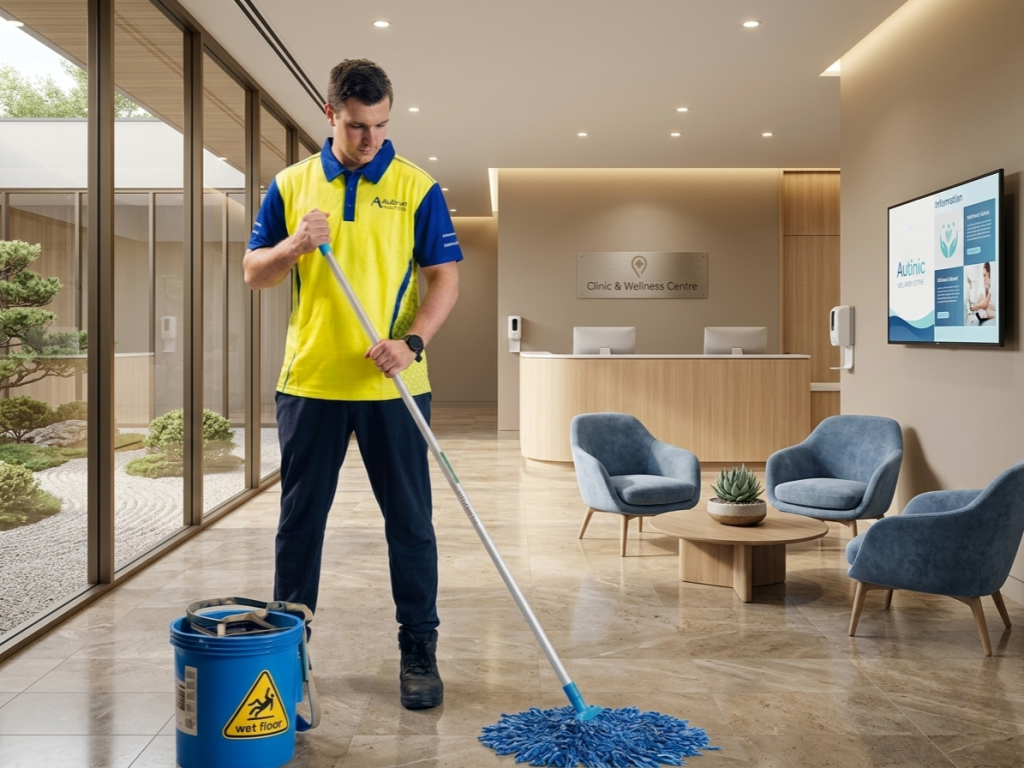 The right cleaning partner turns invisible risks into a reliable standard of care, protecting both your patients and your healthcare staff.
At Associated Cleaning, our medical centre cleaning services combine trained technicians, documented procedures and strict infection control standards designed for Australian healthcare environments.
If you’re reviewing your current cleaning program or preparing for accreditation, request a tailored medical cleaning assessment and free quote to see how our team can support your facility.
The right cleaning partner turns invisible risks into a reliable standard of care, protecting both your patients and your healthcare staff.
At Associated Cleaning, our medical centre cleaning services combine trained technicians, documented procedures and strict infection control standards designed for Australian healthcare environments.
If you’re reviewing your current cleaning program or preparing for accreditation, request a tailored medical cleaning assessment and free quote to see how our team can support your facility.
Q&A
Question: What’s the difference between a standard clean and a true “medical clean,” and why does the “Illusion of Clean” matter? A standard clean focuses on removing visible dirt and smells, which can create an “Illusion of Clean.” A medical clean goes further by actively breaking the chain of infection: disinfecting high-touch surfaces and killing the bacteria and viruses you can’t see. In clinics, germs can move from a door handle to a patient’s hands in seconds, so only a process designed for infection control delivers real safety. Question: Which Australian guidelines govern clinic cleaning, and what proof should a provider offer? The NHMRC’s Australian Guidelines for the Prevention and Control of Infection in Healthcare set the baseline, and accreditation frameworks such as the NSQHS Standards and the RACGP Standards build on them. Disinfectants used in clinical areas should be hospital-grade products entered on the Australian Register of Therapeutic Goods. A reputable provider should be able to show you:- Safety Data Sheets (for chemical handling)
- Training logs (cleaner training and competency records)
- Site-specific scopes (room-by-room checklists)
- Audit reports (regular quality inspections)
- Disinfect the top five hotspots: reception pens, light switches, armrests, tap handles and keyboards.
- Colour-code equipment, for example red for toilets and bathrooms and yellow for clinical areas, so bathroom equipment never touches clinical surfaces.
- Follow documented blood and body fluid spill procedures to contain and disinfect spills safely.
- Use HEPA-filtered vacuums so fine particles are trapped rather than blown back into the air.
- Carry out terminal cleans of treatment and procedure rooms, from high surfaces down to the floor, and record each one.
- Healthcare-specific training records for all staff
- A list of the hospital-grade disinfectants they use, with Safety Data Sheets
- A committed audit schedule, with reports you can use for accreditation
- Clear PPE procedures
- Documented procedures for spills, clinical waste and outbreaks